
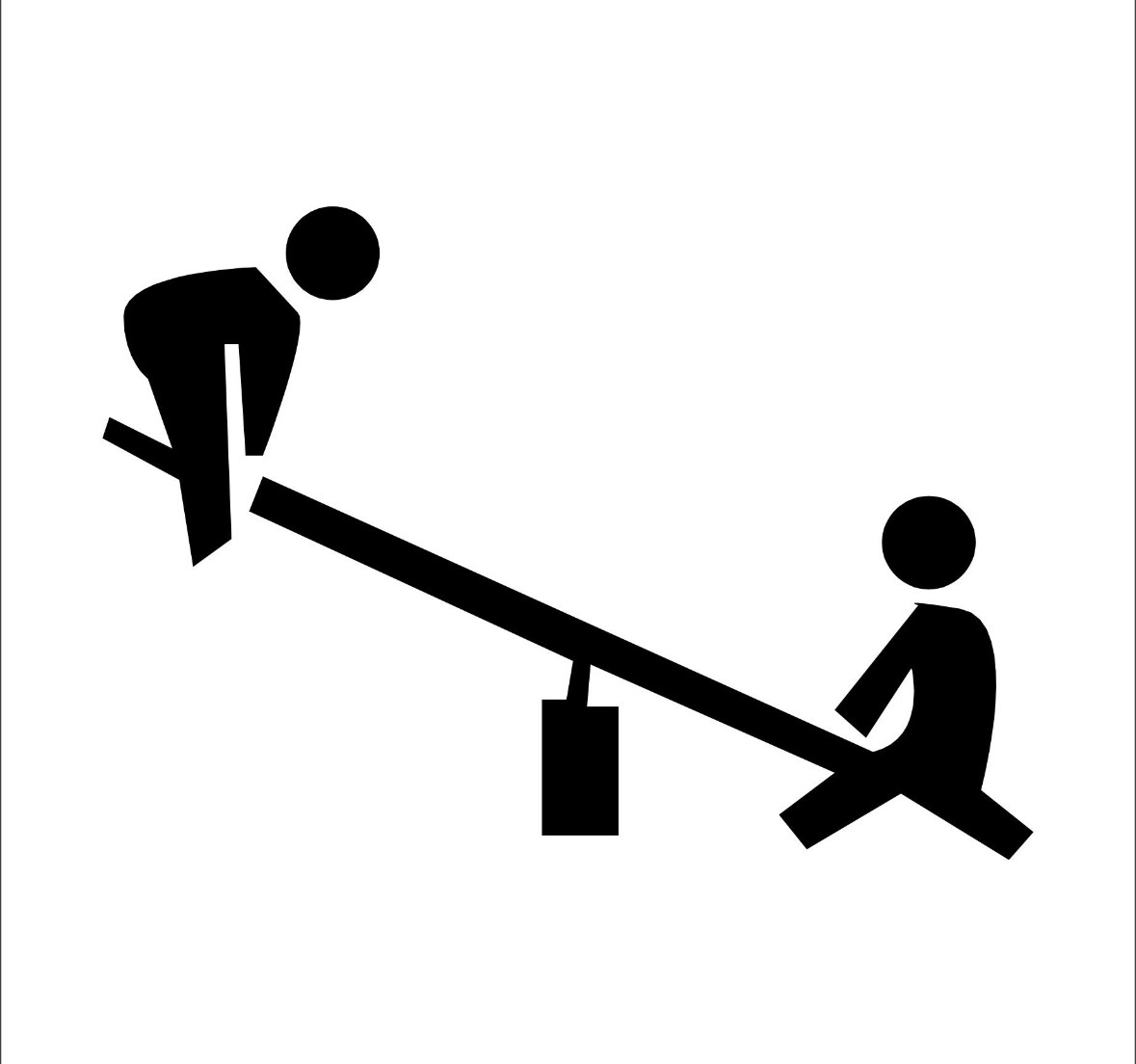
Remember riding a seesaw as a kid? Up and down, up and down. Just sitting there facing each other was no fun. The fun was in the wild swings.
But in life, these kinds of swings can become disorienting. It is human nature—and some would say the nature of the psyche itself—to compensate. In modern language, we might call it “overcorrecting.”
We see it throughout history. Napoleon became so associated with compensation for feelings of smallness that Jung later referenced what became known as the “Napoleon complex.” Centuries before that, Shakespeare gave us Richard III, who lamented that “dogs bark at me as I halt by them.” Feeling grotesque, unwanted, and cut off from love, Richard compensated through the pursuit of domination and power. The compensation was enormous, but the wound remained untouched.
In our own time, we see similar patterns play out in celebrity culture, politics, and everyday life.
As psychotherapists, we encounter these compensations constantly. The lonely, abandoned child grows into an adult who fiercely demands love and validation from everyone around them. The child who was bullied and made to feel small develops a persona of strength, toughness, or invulnerability. The compensation often makes perfect sense. It was created to protect something vulnerable.
The problem is that the compensation never truly resolves the original wound.
Instead, the wounded child is often pushed further underground. Psychologically speaking, the child remains abandoned, living in isolation inside the adult. The protective strategy becomes so dominant that it eclipses the very part of the self it was designed to defend.
Much of therapy involves gaining access to that hidden world. We begin to bring curiosity, care, light, and compassion to the places that have long been neglected. Over time, we can start to see how a strategy forged in the name of survival gradually became an anchor wrapped around the leg of the individual.
This is courageous work because recognizing the compensation is only the beginning. Giving it up is another matter entirely.
Like Linus’s blanket, these old adaptations have been companions for a very long time. They comfort us. They protect us. They tell us who we are.
The goal is not to throw the blanket away. Nor is it to eliminate the complex. Rather, the work is to integrate it. Slowly, often minute by minute, we experiment with new ways of being. We discover that we are larger than the strategies that once defined us.
The compensation becomes one part of the personality rather than the whole personality.
And in that widening space, something new becomes possible: a fuller, more integrated relationship with oneself and the world.

